Knowing how to determine door swing is key in home design. It affects both how well a room works and its look. The right door swing makes moving around easier and rooms more accessible.
Whether you’re redoing your home, starting a new build, or just want to improve your layout, getting door swing right is vital. A well-chosen door makes your home flow better. But, a wrong door swing can cause problems and mess up your space.

Learning about door swing helps you avoid common mistakes. It ensures your doors work well with your home’s design. This makes your home more functional and beautiful.
Key Takeaways
- Understanding door swing is essential for home design.
- Proper door placement enhances room accessibility.
- Avoid installation mistakes by accurately determining door swing.
- Door swing impacts overall flow and functionality of spaces.
- Utilizing effective door swing calculations can streamline renovations.
- A well-placed door contributes to both aesthetics and practicality.
Understanding Door Swing Directions
Knowing how doors swing is key when designing your home. The direction a door opens in can change how rooms are used. This is true for both doors inside and outside your home. By thinking about these details, you can make your home more useful and welcoming.
What is Door Swing Direction?
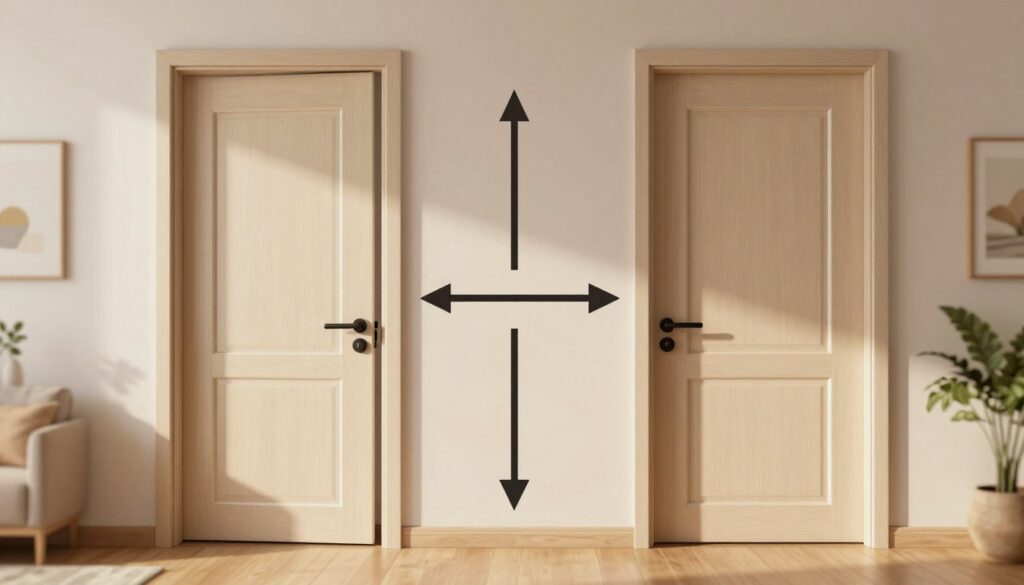
Door swing direction is about the angle a door opens at. Doors can swing left or right, and they can open towards the room or outwards. Choosing the right direction is important for the flow and feel of your space. It’s about making sure each door fits its purpose well.
Importance of Door Swing in Home Design
The direction a door swings is very important in home design. It affects how people move, privacy, and safety. For example, an inward-swinging door is great for small spaces like bathrooms. It helps use the area better.
On the other hand, an outward-swinging door is better for outside access. It makes entryways more convenient and secure. Using the right door swing makes your home look good and work well.
How to Determine Door Swing
Figuring out door swing requires a close look at your space. You need to think about furniture, walls, and how people move. By measuring well, you make sure the door opens easily, improving both looks and function.
Assessing Your Space
Start by looking at your room’s layout. Decide where the door will go and measure around it. Remember to think about:
- Furniture placement: Make sure nothing blocks the door when it opens.
- Wall proximity: Measure how far from the wall to let the door move fully.
- Foot traffic areas: Think about how people will move in and out.
Common Door Swing Calculations
Calculating door swing is key to how it works. Start by measuring the swing’s radius for the right clearance. Keep in mind:
- Measure from the door’s pivot point to its edge.
- Make sure there’s at least 2 inches of space from walls or furniture.
- Figure out the total swing space based on the door’s size.
By following these steps, you make measuring door swing easier. This helps avoid design mistakes, making your space work better.
Types of Doors and Their Swing
Knowing about different doors and their swings is key for both looks and function. Each style can change how a room or entrance feels. So, picking the right one is important.
Interior Door Swing Options
Interior doors come in many styles, each with its own swing way. Here are some common ones:
- Hinged doors: These are the most common and swing inwards or outwards, depending on the design and space needs.
- Pocket doors: These slide into the wall, giving a clean look without the usual swing door opening.
- Bi-fold doors: Often used in closets, they fold back on themselves, saving space.
Exterior Door Swing Considerations
Exterior doors share some styles but need extra thought for weather and security. Here are a few things to remember:
- Weather-stripped hinged doors: They keep out the weather, making them great for different climates.
- French doors: These open outwards and can make a big entrance while letting in lots of light.
- Sliding doors: Perfect for patios or decks, they make a smooth move from inside to outside without a swing door.
Practical Tips for Determining Door Swing
Knowing how to accurately measure door swing is key for good home design. A door swing guide makes this easier, helping you see where doors will fit best. Wrong measurements can cause problems like blocked paths or lost privacy.
Using a Door Swing Guide
A door swing guide is a handy tool for checking how doors will work in different rooms. It helps mark the right spot for hinges and handles. This makes it easier to see where the door will swing. Using a guide ensures you avoid any blockages in your home.
Measuring Incorrect Door Swing
Measuring a door swing wrong can be really frustrating. You need to measure the door’s full size and the space around it. If you don’t, the door might hit furniture, walls, or other doors. Always aim for accurate measurements to save yourself from future headaches.
Conclusion
Knowing how to figure out door swing is key for homeowners wanting to use their space well. Learning about door swing direction helps you decide where to put your doors. This ensures they open smoothly, making your home flow better.
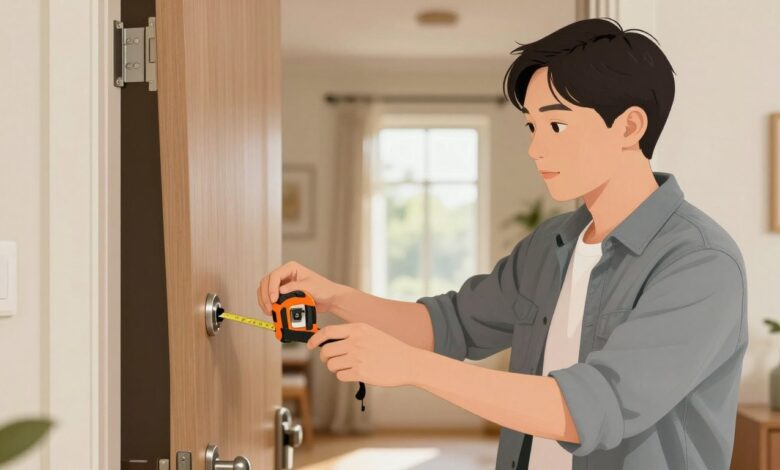
There are easy steps to follow to find out door swing. Using a measuring tape and guides helps you get accurate measurements. This avoids mistakes and makes your home look and work better.
When you start your home projects, think about how door swing can improve your space. With the right knowledge, you can make your home both beautiful and comfortable. Happy decorating!
FAQ
How can I determine the swing direction of my door?
Stand outside your door, facing it. If the hinges are on your left and it opens towards you, it’s a left-hand door swing. If the hinges are on your right and it opens towards you, it’s a right-hand door swing.
Why is knowing the door swing important?
Knowing the door swing is key. It affects how people move in your space. It helps with accessibility, privacy, and follows building codes. This makes your home well-designed.
What are the common calculations for door swing?
Door swing calculations involve the swing radius and clearance. Ensure there’s enough space for the door to open fully. A 36-inch clear area is usually best.
What types of doors have different swing options?
Doors like hinged, pocket, and bi-fold have unique swings. Exterior doors need to be weather-resistant and secure. These factors also affect their swing options.
How can I use a door swing guide?
A door swing guide helps plan where your door will go. It marks the spot and checks for enough swing space. This avoids problems before the door is installed.
What mistakes should I avoid when measuring for a door swing?
Don’t forget space for furniture near the door or the door’s full swing. Always double-check your measurements. A door swing guide can also help visualize the space needed.