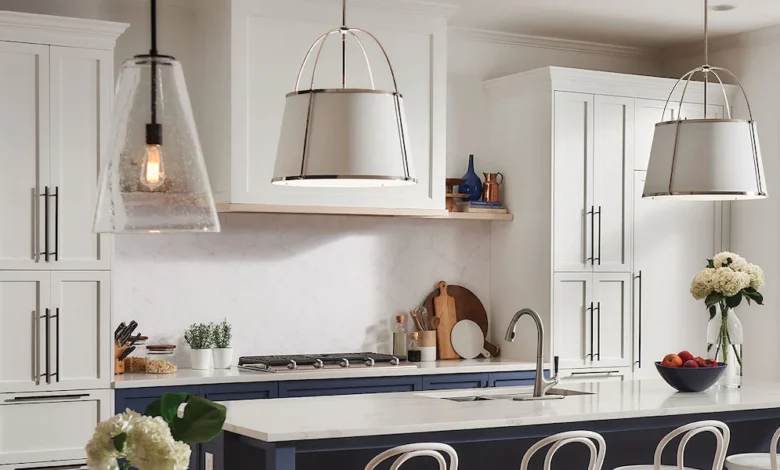
Architectural pendant lights often carry a sense of history and structure. Their shapes reference classic forms while still fitting modern homes. American charm in lighting shows through honest materials and balanced proportions. Let’s explore ways to style these pendants across different rooms.
Pair Pendants with Traditional Materials
Architectural pendants feel at home near natural materials such as wood and stone. Many designers point to Thomas O’Brien architectural pendants at Visual Comfort for classic American elegance as an example of how structured forms meet warm finishes. Wood beams, paneled walls, or brick surfaces create a strong backdrop. Metal finishes like aged brass and bronze help ground a space and add subtle depth through texture.


The contrast between solid forms and softer surfaces brings balance to an interior. These combinations work well in kitchens, entryways, and dining areas where materials need to relate. A strong material link between lighting and architecture supports a cohesive overall design.
Use Symmetry for Classic Appeal
Symmetry plays a large role in spaces that lean toward traditional American style. Two or three matching pendants over a long table create a sense of order. Even spacing helps the eye move calmly across the room. This layout may help improve the sense of structure.
Balanced placement also works well in entryways. A pendant centered above a table or console creates a clear focal point. Repetition of form supports a cohesive look. This method suits rooms that value quiet elegance.
Layer Light with Wall Fixtures
These lights serve as a central light source, yet they work best alongside other fixtures. Wall sconces or table lamps add softer layers at lower levels. This mix helps reduce harsh shadows in the evening. A layered approach supports both function and comfort.
Architectural pendants often feature defined shapes, so secondary lighting should stay simple. Clean-lined sconces or understated lamps keep the focus balanced. The combination creates depth across the room. Light from multiple sources helps highlight textures and details.
Highlight Ceiling Height
Pendant lights naturally draw the eye upward. In rooms with tall ceilings, longer stems or chains emphasize vertical space. This detail helps the room feel grand yet welcoming. A proper scale ensures the fixture does not feel lost above.
Adjust Drop Length Carefully
Consider these points when setting pendant height.
- Align the bottom of the fixture with the room’s visual sightlines.
- Keep enough clearance above tables or islands.
- Match the drop length to the ceiling height and the room scale.
- Use consistent heights when multiple lights appear together.
Small height changes can shift the mood of the space. A slightly lower position adds intimacy to dining areas. A higher position is suitable for busy circulation zones.
Mix Classic and Modern Elements
Architectural pendants often carry traditional cues, yet they pair well with modern pieces in the same space. A structured lantern form above a sleek table creates a gentle contrast that feels thoughtful. This blend keeps the room from feeling tied to one period and adds quiet visual interest. The mix of old and new elements can make the space feel layered and lived in.
Clean lines in furniture allow the pendant’s detailing to stand out without visual clutter. Subtle finishes such as aged brass or soft black help bridge both styles with ease. When balanced carefully, the contrast aids in highlighting the strengths of each piece. This approach supports a timeless look that feels comfortable and natural.
Frame Key Furniture Pieces
Pendants can help define important areas in a room and guide how the space feels. Over a dining table, they act as a visual anchor that draws attention to shared meals and gatherings. In kitchens, they highlight islands or prep zones where daily tasks take place. This focused placement helps organize open floor plans and adds a sense of order.
Placement should closely align with the furniture below for the most balanced result. Centering the light over a table edge or island surface supports visual stability. Proper alignment can improve both the look and everyday usability of the area. The pendant then becomes part of the room’s layout.
Choose Glass for Lightness
Glass shades introduce a lighter touch to structured pendant forms. Clear or seeded glass keeps the fixture from feeling heavy. This option works well in rooms that already feature rich materials. Light passes through more freely and brightens nearby surfaces.
Metal frames paired with glass create a familiar American look. The mix of strength and transparency feels both classic and fresh. Glass also allows decorative bulbs to become part of the design. This detail adds subtle interest without excess ornament.
Architectural pendants with American charm bring structure and warmth to interiors. Thomas O’Brien architectural pendants at Visual Comfort for classic American elegance often serve as a reference for how traditional forms meet refined detail. Material pairing, symmetry, layered light, and scale all influence the final result. Careful styling helps these pendants feel timeless, comfortable, and connected to their surroundings.